Dental Crown vs Filling: When Does a Tooth Need a Crown?

Quick Summary
- A small cavity in a strong tooth can usually be fixed with a filling, while a tooth that’s cracked, heavily filled or hollowed out by a root canal often needs a crown.
- The deciding factor is how much solid tooth is left. Thin or broken walls can’t hold a filling under chewing pressure, so a crown wraps the tooth to keep it together.
- Pain when you bite or let go, a chipped corner on a back tooth, an old filling that keeps failing, and a tooth that’s had a root canal are common signs a filling may not be enough.
- A filling is quicker, cheaper and keeps more natural tooth. A crown usually takes two visits and costs more, but it protects a weak tooth far better and often lasts 10 to 15 years or more.
- Glee Dental is based in Adambakkam and is the local choice for dental care across Puzhuthivakkam, Velachery, Madipakkam and Nanganallur.
Not sure if your tooth needs a crown or a filling? Call Glee Dental on +91 99400 71737
Your dentist says the tooth needs a crown, and the first thing you want to know is whether a filling would do. Sometimes it would. If the damage is small and the tooth around it is still strong, a filling is the simpler fix. If a big part of the tooth is gone or cracked, a crown is the safer choice, and how much it hurts has very little to do with it.
The Difference Between a Filling and a Crown
What is a dental filling?
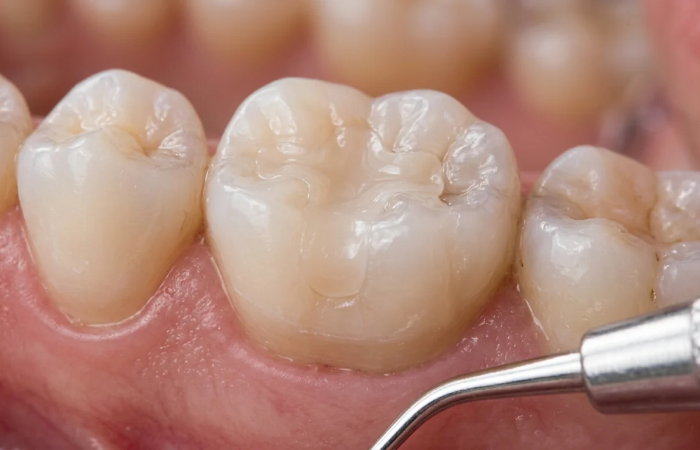
A dental filling is a repair for a tooth with a cavity or minor damage. The dentist removes the decayed part and fills the space with a material such as tooth-coloured composite. It’s shaped to match the tooth and hardened in place, usually in one visit, and only the damaged area is treated.
What is a dental crown?
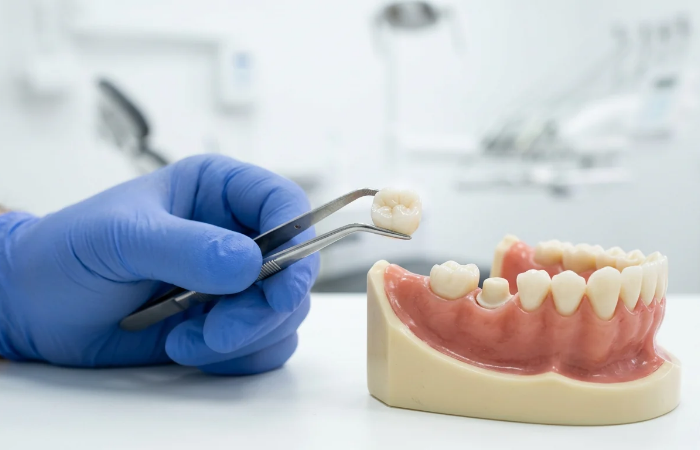
A dental crown, often called a cap, is a custom-made cover that fits over the entire visible part of a tooth. It restores the tooth’s shape and strength and protects it from breaking.
Crowns come in a few materials, and the right one depends on the tooth’s position, your bite and your budget. Zirconia is very strong and suits back teeth. All-ceramic crowns such as e.max look the most natural, which makes them a favourite for front teeth. Metal-ceramic crowns cost less and have a long track record, though a thin grey line can show at the gum over time.
A filling fixes one part of the tooth, while a crown protects the whole thing. Because fillings keep more of your natural tooth, dentists use them whenever they can. A crown is the better option when the tooth is too weak to hold a filling safely.
Picture a pothole in a road. If the road around it is solid, you fill the hole and drive on. If the edges are crumbling, a patch won’t last and the whole stretch needs resurfacing. Teeth work much the same way, and it’s why a dentist may rebuild the gap with tooth-coloured material in one tooth and suggest a crown for another.
How Dentists Decide Which One You Need
It comes down to the walls of the tooth. Once the decay is cleaned out, the dentist looks at what’s left. Thick, healthy walls can support a filling. Thin, cracked or missing walls can’t, because every bite pushes them apart. That’s when a crown is needed to protect what’s left.
Here’s what gets checked:
- How big the damage is. When it spans around half the tooth’s width or more, a filling often won’t hold.
- The cusps. These pointed corners on back teeth do the heavy grinding. A broken or undermined cusp is one of the most common reasons for a crown.
- Cracks. A filling can’t stop a crack from spreading. A crown covers the tooth and stops it from splitting further.
- Past repairs. Every time an old filling is replaced, a little more natural tooth is lost.
- Root canal history. A root canal clears the infected pulp from inside the tooth, which leaves back teeth with less internal support for heavy chewing. That’s why molars and premolars usually get a crown afterwards, while front teeth with plenty of healthy structure can sometimes be finished with a filling. If you’re still weighing up whether a painful tooth is worth saving, it helps to understand how dentists choose between a root canal and an extraction.
- Where the tooth sits. Molars take far more chewing force than front teeth, and grinding or clenching at night adds even more.
An X-ray shows how deep the damage runs, which is why your dentist may take one even if the tooth feels fine.
Signs a Filling Might Not Be Enough

Some signs are easy to spot, while others only show up when you bite or look closely in the mirror. Watch for these.
- A sharp twinge when you bite down or release, a classic sign of a crack
- A chipped corner on a back tooth, often noticed mid-meal
- A large silver filling with dark edges or fine lines around it
- A filling that keeps cracking, leaking or falling out
- A tooth that has turned grey after an old injury or root canal
- Teeth worn short or flat from grinding
Any of these is a reason to book a check, not proof you need a crown. Some cracked teeth still suit a filling, and some painless teeth turn out to need more.
Crown vs Filling at a Glance
Here’s how the two compare on the things most people ask about first:
| Filling | Crown | |
|---|---|---|
| Best for | Small to medium cavities, minor chips | Large damage, cracks, root canal teeth, worn teeth |
| Visits | Usually one | Usually two, with lab time in between |
| Tooth removed | Only the decayed part | Reshaped all round to fit the cap |
| Protection | Repairs one area | Covers and braces the whole tooth |
| Typical lifespan | Several years, depending on size and bite | Often 10 to 15 years or more |
| Upfront cost | Lower | Higher, depends on material |
Whichever you get, it lasts longer with daily brushing and flossing, fewer sugary snacks and a night guard if you grind.
The Risk of Choosing a Filling Over a Recommended Crown
It might hold for a while, but a big filling in a weak tooth tends to fail early. The thin walls around it can crack under chewing, sometimes right down to the root. A tooth a crown could have saved may then need a root canal or extraction, which is harder on you and your budget.
That’s why a dentist might suggest a crown before the tooth hurts. Protecting it now is simpler than rebuilding it after it splits.
Questions Patients Often Ask
Yes. The crown can’t decay, but the natural tooth underneath can, usually where the crown meets the gum. Brushing, flossing, and regular check-ups keep that edge healthy.
Find Out What Your Tooth Needs
Whether it’s a big old filling, a chipped back tooth or a twinge every time you bite, the right fix depends on what’s happening inside the tooth. At Glee Dental in Adambakkam, every plan starts with a thorough check and a clear explanation of your options and costs before any treatment begins. Crowns are designed under an in-house prosthodontist’s supervision, and most fillings are done in a single visit. Contact us to find out exactly what your tooth needs.


Have a Dental Concern or Need a Specialist Opinion?
Whether you are deciding between saving a tooth with a root canal or exploring implants and aligners, our doctors in Adambakkam are here to guide you with honest assessments and no pressure.