Dental Implant vs Dental Bridge vs Denture: Which Tooth Replacement Option May Suit You?

Losing a tooth changes more than your smile. It affects how you bite, how you speak, and over time, how your jaw bone holds its shape. The sooner you replace a missing tooth, the better your long-term outcome tends to be.
But choosing how to replace it is where most people get stuck.
Dental implants, bridges and dentures each work differently, cost differently and suit different situations. One is not universally better than another. The right answer depends on your bone structure, the number of teeth you're missing, your health history and your priorities.
What follows breaks down each option plainly: what it is, how it works, what it costs in relative terms, and what questions to ask your dentist before you decide.
What Is a Dental Implant?
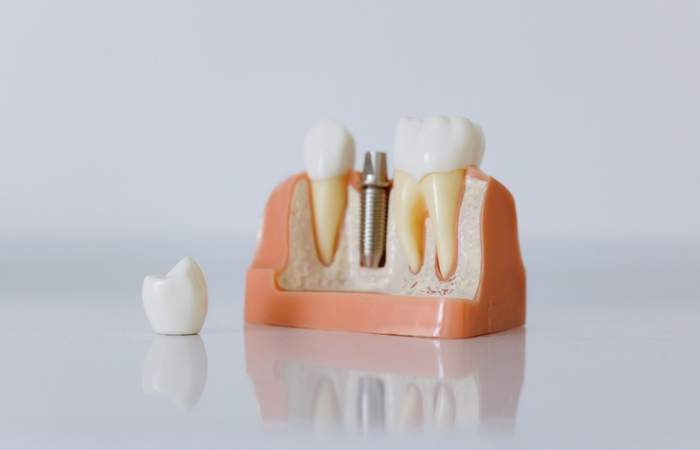
A dental implant is a titanium post placed into the jaw bone to act as an artificial tooth root. Once it fuses with the bone (a process called osseointegration), a ceramic crown is attached on top. The result looks, feels and functions like a natural tooth. Unlike other replacement options, it's also the only one that stimulates the jaw bone, which helps prevent bone loss over time. It also works independently, with no alteration needed to the teeth on either side.
How the Process Works
The implant process typically unfolds over several months:
-
Assessment and imaging: your dentist takes X-rays or a CBCT scan to assess bone volume and jaw structure.
-
Implant placement: the titanium post is placed under local anaesthetic in a minor surgical procedure.
-
Healing period: the implant integrates with the jaw bone over three to six months. Some patients receive a temporary crown during this phase.
-
Crown placement: once the implant is stable, a custom ceramic crown is fitted on top.
Timeline varies by patient. If bone grafting is needed first, the overall process may take longer.
Who May Be a Good Candidate
-
Adults who have finished jaw bone development
-
Patients with adequate bone density in the jaw
-
Non-smokers, or those willing to quit before and during treatment
-
Those without uncontrolled diabetes or blood-thinning conditions that affect healing
-
Anyone replacing one or a few individual teeth
An in-person assessment with imaging is the only way to confirm candidacy. A dentist who tells you you're suitable without imaging has not done a proper workup.
What Is a Dental Bridge?
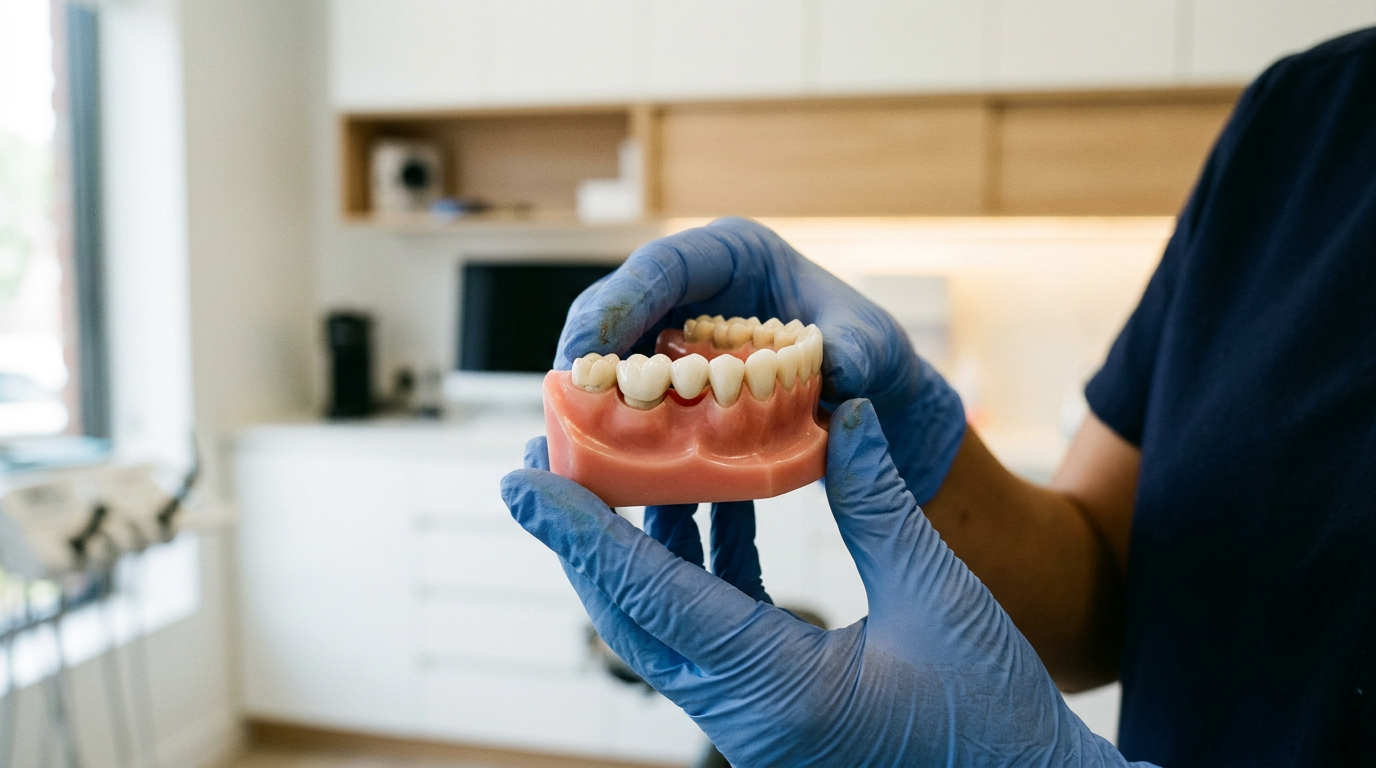
A dental bridge is a fixed restoration that spans a gap using a false tooth (called a pontic) held in place by crowns cemented onto the teeth on either side. Those neighbouring teeth (called abutment teeth) are reshaped to accept the crowns, which anchor the whole structure. No surgery is required, and the process can typically be completed in two to three visits. It's most suitable when the neighbouring teeth already need crowns, or when implants aren't a viable option.
How the Process Works
-
Consultation and shade matching: your dentist evaluates the gap, the health of adjacent teeth and your bite.
-
Tooth preparation: the two abutment teeth are reshaped to accept crowns.
-
Impressions: moulds are taken and sent to a dental laboratory.
-
Temporary bridge: a temporary restoration is placed while the permanent bridge is made.
-
Fitting: the permanent bridge is cemented into place and adjusted for bite.
Most bridge placements are completed across two to three visits over two to three weeks.
Who May Be a Good Candidate
-
Patients missing one or a few teeth in a row
-
Those who want a fixed solution without surgery
-
Patients whose adjacent teeth are already compromised or crowded
-
Anyone with insufficient bone for implants who doesn't want a removable option
-
Those seeking a faster timeline than implants typically require
The trade-off is that healthy adjacent teeth must be altered to support the bridge. If those teeth are in excellent condition, that's worth considering carefully.
What Is a Denture?
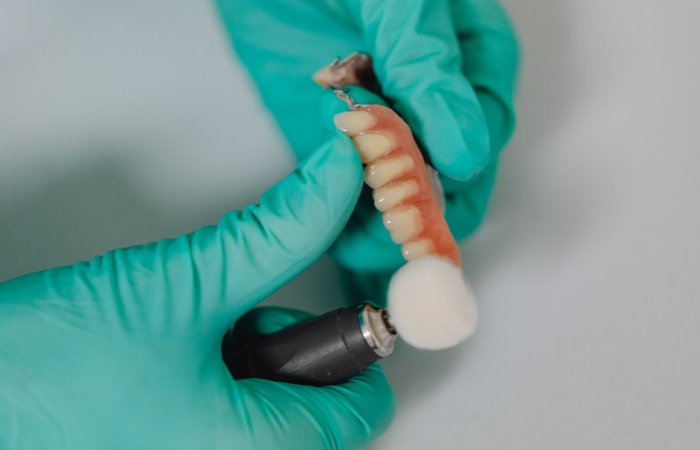
A denture is a removable appliance that rests on the gum to replace several or all missing teeth in an arch. Partial dentures work alongside remaining natural teeth. Complete dentures replace a full upper or lower arch when no teeth remain. No surgery is involved, and dentures cost less than fixed options and can be made relatively quickly. Fit varies by patient, and most need periodic adjustment or relining as the jaw continues to change shape after tooth loss.
How the Process Works
-
Impressions: detailed moulds of your gums and remaining teeth are taken.
-
Trial fitting: a wax model is checked for fit, bite and appearance before the final version is made.
-
Fitting and adjustment: the finished denture is fitted and refined for comfort.
-
Follow-up: most patients return for minor adjustments in the weeks following fitting.
Immediate dentures can be placed the same day as extractions, though they typically require refitting once the gum heals and shrinks.
Who May Be a Good Candidate
-
Patients missing many or all teeth
-
Those who are not surgical candidates due to health conditions
-
Anyone on a tighter budget who needs a faster, lower-cost solution
-
Patients who need an interim solution while planning long-term treatment
-
Older adults whose bone density doesn't support implants without extensive grafting
Dentures require daily cleaning, careful handling and periodic relining to maintain fit as the jaw continues to change shape after tooth loss.
Dental Implant vs Bridge vs Denture: Side-by-Side Comparison
| Feature | Dental Implant | Dental Bridge | Denture |
|---|---|---|---|
| Fixed or removable | Fixed | Fixed | Removable |
| Surgery required | Yes | No | No |
| Affects adjacent teeth | No | Yes (reshaping) | No |
| Bone stimulation | Yes | No | No |
| Treatment time | 3–9 months | 2–3 weeks | 2–4 weeks |
| Lifespan (approx.) | 15+ years with care | 10–15 years | 5–10 years |
| Maintenance | Brush and floss as normal | Floss under bridge with threader | Daily removal and cleaning |
| Best for | Single or multiple missing teeth with good bone | One to three missing teeth in a row | Multiple or full arch tooth loss |
These figures are general estimates. Individual outcomes depend on bone health, oral hygiene, diet and follow-up care. Your dentist will give you a more precise picture based on your clinical assessment.
What Affects Which Option Suits You
Jaw Bone Density
Implants need sufficient bone to anchor into. If significant bone has been lost since the tooth was removed, which happens over time, a bone graft may be required before implant placement, or implants may not be the right option at all.
Bridges and dentures don't require the same level of bone support, though dentures can accelerate bone loss over time because they don't stimulate the bone the way a root does.
Number of Missing Teeth
One missing tooth can be replaced by a single implant or one end of a bridge. Three missing teeth in a row suit a bridge well. A full arch of missing teeth is usually best addressed with complete dentures, implant-retained dentures, or a full-arch implant system, each with its own timeline and cost.
Overall Health
Certain health conditions affect healing after implant surgery. Uncontrolled diabetes, blood-thinning medications, radiation to the jaw and active gum disease can all affect candidacy. A thorough medical history review is part of any proper implant assessment.
Budget and Timeline
Implants carry a higher upfront cost but often cost less over a lifetime because they last longer and don't need replacement as frequently. Bridges fall in the middle range. Dentures are the most accessible entry point for most patients.
There is no universally right financial decision here. It depends on your priorities, your other teeth and your long-term plan.
Age and Stage of Life
For younger patients, an implant placed now may well last the rest of their life with good care. For older patients with multiple health considerations, a well-fitted denture may be the more practical path. Neither answer is a compromise. Both can produce excellent functional and aesthetic results when matched to the right patient.
Questions to Ask Your Dentist Before Deciding
Before committing to any tooth replacement option, ask:
-
"Do I have enough bone for an implant, and how do you know?" Imaging should be part of this answer, not just a visual examination.
-
"Will the adjacent teeth need to be altered for a bridge, and what condition are they in now?" Healthy, unrestored teeth being ground down for a bridge is a significant trade-off.
-
"What happens to my bone over time with a denture?" Dentures don't prevent bone loss, and it's worth understanding what that means for your jaw over the next decade.
-
"What's the realistic maintenance routine for each option?" Daily habits and follow-up appointments vary considerably across the three options.
-
"What's the total cost including adjustments, replacements and any preparatory work?" Ask for a written treatment plan with full cost disclosure before anything begins.
A dentist who walks you through these questions without rushing is one you can trust with the decision.
Questions Patients Often Ask
Dental implants generally have the longest lifespan, often 15 years or more with proper care. Bridges and dentures have shorter replacement cycles, as the comparison table above shows. The more relevant question is which option will hold up best given your specific bone, bite and health situation, and your dentist can advise on that directly.
The Right Replacement Depends on the Right Assessment

There's no shortcut to this decision. The right option depends on your bone, your remaining teeth, your health history and your priorities, and none of those can be assessed without a proper in-person examination.
The most important thing you can do is book an assessment with a dentist who will explain your bone density, the condition of your adjacent teeth, your health history and your realistic options in plain language, before any treatment begins.
At Glee Dental in Puzhuthivakkam, Chennai, Dr Kiruthika Koteeswaran and a team of in-house dental specialists, including a prosthodontist, an implantologist and an oral and maxillofacial surgeon, assess tooth replacement cases together. Contact us to book a consultation and get a clear picture of which option suits your situation.


Have a Dental Concern or Need a Specialist Opinion?
Whether you are deciding between saving a tooth with a root canal or exploring implants and aligners, our doctors in Adambakkam are here to guide you with honest assessments and no pressure.